A Little Boy in Blue
Transcript
A little boy in blue, sung by Byron G. Harlan, is a song to record. A mother sits in sadness, thinking of her only son, and she looks up at two pictures on the wall. They're all that's left to cheer her, and she says, I will be done.
And she moans for him who's gone beyond recall. One shows him as a little boy in soldier's clothes at play, with his army lines scattered on the floor. The other in his uniform the day he marched away, and he says goodbye and lasts forevermore.
Here's his strength when the band starts playing, that her eyes fill up with tears, as the soldiers pat her window, and the streets ring out with cheers. For it's then that her heart is at ease, and it seems it can be true. And she looks up at the pictures of a little boy in blue.
Here's his strength when the band starts playing, that her eyes fill up with tears, as the soldiers pat her window, and the streets ring out with cheers. For it's then that her heart is at ease, and it seems it can be true. And she looks up at the pictures of a little boy in blue.
Transcribed by AI from the recording above. These are noisy hundred-year-old cylinders, so expect misheard words and the occasional invented line — trust your ears over the text.
- Format
- 2-Min Wax Cylinder
- Release year
- 1902
- Duration
- 2:14
Audio public domain, courtesy of the UCSB Cylinder Audio Archive. Transcript CC BY 4.0. Free to reuse, including commercially, with credit.
About the artist
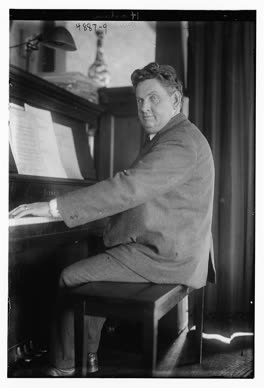
Public domain
Byron G. Harlan 1861–1936
An American tenor, enormously prolific in the acoustic era, best known for the sentimental and rustic material of the day and for his long partnership with the baritone Arthur Collins. The Collins and Harlan duets were a fixture of American catalogues for two decades.
Written from Wikipedia. Corrections welcome.